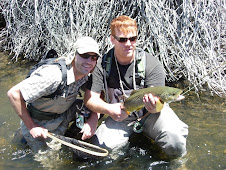
For most anglers the thought of fly fishing brings up fond memories of standing knee deep in cool water to beat the heat of the afternoon while casting to rising trout with a dry fly. They look out the window or check the weather before even thinking about going fishing and only fish on the best days of the season. There is nothing wrong with this fair weather philosophy. For those who fish just to get outside, breathe some fresh air, and enjoy their surroundings there is no better time then a seventy degree June day when the trout are rising and the fishing is easy. Even if the fish aren't active it is still a joy to be in the outdoors soaking up the sun. After all fishing is all about the experience, right?
For some anglers, however, it goes beyond simple enjoyment. Those who want to learn and progress as fishermen recognize that they must practice in a variety of different sit
 uations and conditions. Anyone able to cast will catch trout when they are feeding haphazardly during the height of a hatch, but it takes practice, skill, and experience to catch the same fish when they aren't readily eating. The only way for an angler to gain that level of expertise is to expand their horizons, getting out there more often and fishing hard despite wind, rain, snow, and otherwise cold or unpleasant weather.
Steelhead anglers are a great example of this philosophy. They brave the elements day in and day out, freezing their butts off and many times getting skunked in the process. They do this because they understand that's wh
 at it takes to catch steelhead, and every time their fly is swinging through that run or their nymph is dead drifting along a good seam they know that there is a possibility of hooking a fish that makes it all worth their while.
Many fishermen believe that some of the best fishing can be had during some of the worst weather. For example Bernie Taylor, author of Big Trout writes about light penetration being a key factor in fish activity. He explains that trout, having sensitive eyes and no eyelids for protection from the sun, will generally shy away from bright light and feed actively only during dawn and dusk when they can get the jump on their prey while staying safe from predators. Fishermen may enjoy getting some sun, but trout don't. When the sun is high in the sky and Joe Bob is soaking up rays and flogging the pool all
 those trout are hunkered in the deep hiding along cut banks, dropoffs, and in the shadows of rocks. On cloudy, windy, or otherwise miserable days those trout don't have to hide away and it is quite common to find them actively feeding throughout the day.
Even if they aren't catching trout, anglers who fish during adverse weather situations can increase their fishing skills dramatically. Take two anglers for example. For the sake of this article we'll call them Joe Bob and Johnny Trout. Joe bob only fishes when it is sunny outside and there isn't a breath of wind. He goes out every once in a while and catches a fair amount of trout. He always enjoys himself and considers himself a pretty good angler. Well one day he decides he is bored of fishing his local stream and books a trip with a guide out in Montana where he hopes to have the trip of a lifetime. He gets out there on the big day only to discover that it is blowing 30 mph and being inexperienced in this type of situation he can't get a good cast, doesn't present his fly correctly to very many fish and goes home disappointed, probably blaming the poor guide and giving a lousy tip for a lousy day. Now take Johnny Trout. Johnny wants to be the best fisherman he can be and gets out on the water every chance he can. He has been out on more than one windy day and figured out how to deal with it. He books a trip on the same river the same day and nails the fish. His experience and dedication pays off with memories he will have for the rest of his life.
Some of the best seasons to hook the fish of a lifetime are late fall and early spring when fish are gorging themselves in preparation for winter or coming off a long cold season with little to eat. Targeting fish during these times inevitably means dealing with bad weather. There is always a chance to randomly catch hog any time during the season, but fishing during the right time even if it means getting rained or snowed on can pay off in a big way.
 As the quality of equipment available to anglers improves, more and more fly fishermen are venturing out during adverse weather and hooking the fish of their dreams. Sometimes shelling out the extra bucks is what it takes to stay warm, dry, and comfortable, but standing knee deep in 36 degree water with snow falling all around them while they cradle the biggest fish they have ever seen, most anglers can't even remember they have a checking account.
Just about the only thing anglers should keep in mind when considering the weather for a fishing trip is safety. This is common sense. If it isn't safe simply stay home, but don't let bad weather keep you from becoming a better fisherman and hopefully catching some beautiful fish.